AIRCHILL · Development-stage medical technology

Controlled cooling, built into ventilation.

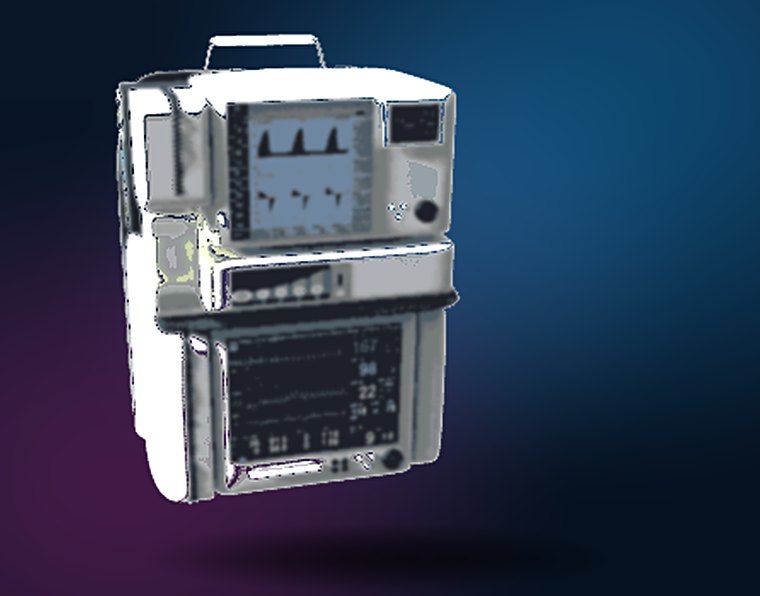
AIRCHILL is a development-stage transport ventilator that additionally cools the patient through the airway, intended for use from the first minutes on scene. The mechanism is published and peer-reviewed. Clinical benefit is a hypothesis, not a finding.

University Medical Center Hamburg-EppendorfBMBF Go-Bio 031A530Therapeutic Hypothermia and Temperature ManagementISMRM 2016 · Magna cum laude
54,000–67,000Resuscitation attempts by emergency medical services per year in GermanyGerman Resuscitation Register 2024
30.3 %Are admitted to hospital with return of spontaneous circulationReference group 33.6 %
16,000–20,000Patients per year in Germany inside that windowOwn calculation from both figures
8.8 %Survive to hospital discharge or 30 daysReference group 10.9 %

German Resuscitation Register, public annual report 2024: 27,009 documented out-of-hospital resuscitations in a covered population of approximately 42.07 million; incidence in the quality-assured reference group 80.08 per 100,000 population per year; the register extrapolates 54,000–67,000 resuscitations per year for Germany. Shockable rhythm 22.5 %, bystander CPR 52.0 %.

Why now

The large trials answered a different question.

TTM2 randomised patients a median of 136 minutes after return of circulation, and then needed a median of three more hours to reach 34 °C — target temperature roughly five hours after the event. What it tested was late temperature control against fever control, and there it found no benefit. What it did not test, and cannot speak to, is cooling that begins in the first minutes on scene. That question is still open.

Unmet workflow

Cooling starts hours late

Established cooling workflows are equipment-intensive and begin after transport or on hospital arrival. The window nobody has tested properly is the one before that.

Design hypothesis

Use the pathway already in place

Every intubated emergency patient is already being ventilated. AIRCHILL investigates whether controlled cooling can ride on that pathway instead of adding a second device.

Evidence discipline

Claims follow data

Mechanism, airway safety, technical performance and patient outcome are four separate gates. We do not use evidence from one to argue for another.

Mechanism

Proof of mechanism — measured, published, and bounded.

The work below was carried out at the Department of Diagnostic and Interventional Neuroradiology, University Medical Center Hamburg-Eppendorf, under BMBF Go-Bio grant 031A530, with Fabian Temme as co-author. It establishes a measurable temperature effect and preclinical airway safety. It does not establish patient benefit.

A temperature effect you can see

MRI thermometry of a healthy volunteer before, during and after high-flow cold air delivery. The blue region marks the anterior brain during cooling; the effect resolves afterwards. Measured in two volunteers across three experiments — −0.33 °C in the inferior frontal gyrus, significant in every experiment (p < 0.05). The three other regions did not change.

ISMRM 24th Annual Meeting, Singapore 2016, Magna cum laude poster award. Conference-abstract level; not a patient study.

Six hours of cold air, lung tissue intact

Histology of porcine lung after six hours of ventilation with air at −20 °C through an endotracheal tube. All structures histomorphologically intact — bronchiole, cartilage, blood vessels, alveoli. No pulmonary oedema on CT, lung perfusion unchanged on MRI and DSA.

Final report, BMBF grant 031A530, University Medical Center Hamburg-Eppendorf, 28 March 2017: “Sicherheitsbedenken sind aus unseren Untersuchungen nicht abzuleiten.”

Sedlacik J, Kjørstad Å, Nagy Z, Buhk JH, Behem CR, Trepte CJ, Fiehler J, Temme F. Feasibility Study of a Novel High-Flow Cold Air Cooling Protocol of the Porcine Brain Using MRI Temperature Mapping. Therapeutic Hypothermia and Temperature Management, doi 10.1089/ther.2017.0031 · Final report “Airchill – Gekühlte Beatmung”, BMBF grant 031A530, Department of Diagnostic and Interventional Neuroradiology, University Medical Center Hamburg-Eppendorf, 28 March 2017 · Kjørstad Å, Temme F, Fiehler J, Sedlacik J, ISMRM 24th Annual Meeting, Singapore 2016.

Measured values

Every number we have, and where it comes from.

These are the results of the BMBF Go-Bio project at University Medical Center Hamburg-Eppendorf and of the ISMRM 2016 poster. They are preclinical and small-sample. We show all of them, including the ones that argue against us.

−0.33 °CWhole-brain temperature change after five minutes of cooling, ± 0.30Sedlacik 2017 · pig, n = 5
−0.83 °CAnterior brain over the same period, ± 0.51 — the effect is front-weightedSedlacik 2017 · pig, n = 5
−0.03 °CPosterior brain — effectively unchanged, ± 0.21Sedlacik 2017 · pig, n = 5
−0.64 °CMean anterior reduction across all eight experiments; pig −0.8, human −0.33ISMRM 2016 poster
73 ± 14 %Of the maximum effect reached after only three minutes of coolingISMRM 2016 poster
p < 0.05Significant in all eight experiments, Wilcoxon rank-sumISMRM 2016 poster
6 hVentilation with air at −20 °C through an endotracheal tube, lung histology intactGo-Bio final report 031A530
11Healthy volunteers tolerated cold air to −20 °C for up to ten minutesGo-Bio final report 031A530
≈ 0.3 °C/minSurface temperature drop under endonasal cold air, thermographic quantificationGo-Bio final report 031A530
3 TSiemens Magnetom Skyra, proton-resonance-frequency phase mapping, one image per minuteSedlacik 2017 · method
250 L/minHigh-flow cold air at −10 °C delivered through the nasal cavitySedlacik 2017 · protocol
0Patients treated. No efficacy, no patient safety, no outcome data existsOur own claim register
The map behind the numbers

MR thermogram of the porcine brain with cooling off at ten minutes and on at twenty. The anteroposterior gradient is what produces the difference between −0.83 and −0.03 °C in the table above.

Sedlacik J et al., Therapeutic Hypothermia and Temperature Management, doi 10.1089/ther.2017.0031.

The independent check

An intracerebral probe placed through a burr hole recorded the same effect during endonasal cold air ventilation, and MRI and probe measurements agreed. Temperature falls within minutes and returns afterwards.

Go-Bio final report, BMBF grant 031A530, University Medical Center Hamburg-Eppendorf, 28 March 2017.

Sedlacik J, Kjørstad Å, Nagy Z, Buhk JH, Behem CR, Trepte CJ, Fiehler J, Temme F. Feasibility Study of a Novel High-Flow Cold Air Cooling Protocol of the Porcine Brain Using MRI Temperature Mapping. Therapeutic Hypothermia and Temperature Management, doi 10.1089/ther.2017.0031 · Final report “Airchill – Gekühlte Beatmung”, BMBF grant 031A530, Department of Diagnostic and Interventional Neuroradiology, University Medical Center Hamburg-Eppendorf, 28 March 2017 · Kjørstad Å, Temme F, Fiehler J, Sedlacik J, ISMRM 24th Annual Meeting, Singapore 2016.

What we found against ourselves

The route we differentiate on is the weaker one.

“Die erreichte Kühlleistung auf die Zielorgane war gering bzw. lokal begrenzt — mutmaßlich auf die Totraumventilation zurückzuführen.”

That sentence is from our own final report, about the endotracheal route — the very route AIRCHILL uses to differentiate itself from transnasal devices. The report recommends the endonasal route instead. We publish this because any serious due diligence will find it, and because it defines the engineering problem precisely: dead-space ventilation is a design constraint, not a law of physics. Flow, temperature, timing and circuit geometry were not optimised in 2017.

The three findings every due diligence will surface

RhinoChill has carried a CE mark for prehospital transnasal cooling since April 2011 and missed its primary endpoint in PRINCESS (n = 677). Taccone et al., Crit Care 2024;28:335 filtered the HACA-like shockable subgroup out of TTM2 (n = 600) and found no advantage there either. And our own Go-Bio report measured low cooling performance for the endotracheal route. All three are stated openly in our deck, our business plan and on this site.

Development

Three gates from thermodynamics to patient benefit.

Each gate is financed, scoped and falsifiable. Timings, sample sizes and financing are management planning assumptions, not commitments.

Gate A · 2026–2028

Bench and airway safety

Temperature, flow, FiO₂, humidity, condensation, pressure, oxygen compatibility, transport and vibration, ISO 18562.

Gate B · 2029

First-in-patient feasibility

Planning range 40–80 patients. Technical performance, process integration, airway safety and temperature-related endpoints.

Gate C · 2030–2031

Confirmatory study

Planning range 300–600 patients. Final sample size only after effect size and event rate are known; patient-relevant endpoints.

Gates, periods and sample sizes: management planning, Medical Cooling investor deck 2026. An early market entry is planned around a narrow performance and safety claim; a neurological outcome claim requires a separate and substantially larger evidence pathway.

Investors

Capital follows evidence, not the other way round.

The current round is modelled at € 7.5 million over 30 months, with an indicative € 10–15 million follow-on after Gate B. The base case carries no commercial revenue through 2031 — a deliberate modelling boundary, not a forecast.

Current round

€ 7.5m · 30 months

Team and regulatory affairs, engineering, verification and validation, preclinical preparation.

Follow-on

€ 10–15m indicative

After Gate B. Amount and timing are not committed.

To performance claim

€ 12 / 17 / 24m

Low, base and high management planning bands. No quotations obtained.

Documents

Plan and model on request

Business plan in bank, development-bank and venture versions, plus the 2027–2031 financial model.

Build the next evidence gate with us.

We are looking for clinical investigators, engineering and manufacturing partners, regulatory expertise and long-term medical technology investors.